Year-Round Planning for H-2A Program Success
A successful H-2A season doesn’t start when your workers arrive. It starts months earlier, with the planning, preparation, and decisions you make throughout the entire year. From forecasting labor needs and preparing for recruitment to reviewing last season’s challenges and making improvements, the work you do now can make a significant difference when the next farming season begins.
So, what separates farms that are well-prepared for the season ahead from those that are scrambling to catch up? In today’s blog, we’re breaking down the year-round planning strategies successful H-2A employers use to strengthen their workforce, prepare for the unexpected, and set their operations up for a more productive season.
Start with a post-season H-2A Program review
Putting your ag operation in the best position to succeed next season using the H-2A Visa Program starts with evaluating your previous farm season. Start by asking questions such as what worked, what didn’t, and what needs to change. This is your opportunity to take stock of your operation and whether the H-2A Program helped you achieve your workforce goals. Look at:
Did you have enough H-2A workers?
Did your H-2A workers arrive on time?
Which jobs or positions were hardest to recruit for and fill?
Were there housing issues?
Were there transportation challenges?
Daily transportation?
Inbound transportation?
Outbound transportation?
Did your H-2A agency meet expectations?
Were your applications or Job Orders filed on time without issues?
Were you able to get in touch with critical POCs during important times?
Were all of your worker-related or application questions answered?
Answering these questions will give you a good idea of how the H-2A Visa Program, your H-2A workers, and your H-2A agency worked for your ag operation. Again, look at what needs to change or improve to best fit your farm business.
Get feedback from your H-2A workers, farm supervisors, and domestic employees
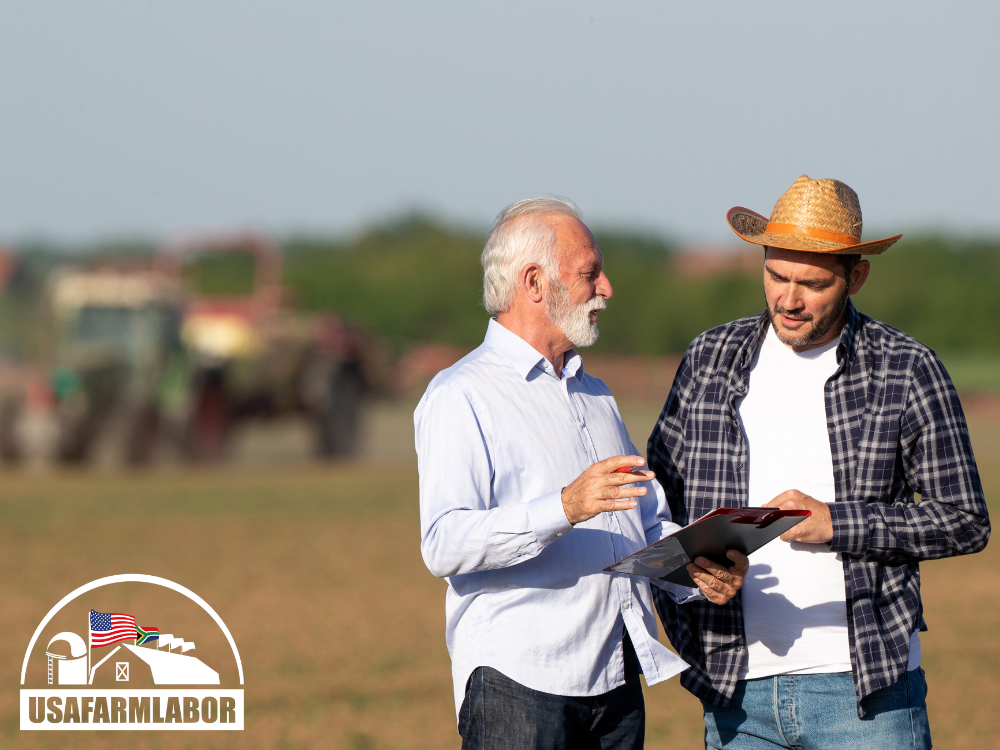
Getting feedback from different types of farm employees will ultimately help you make better decisions about your ag operation. Listen to your seasonal H-2A workers, domestic employees, and, of course, your supervisors or crew leaders regarding things like:
Housing
Transportation
Job duties
Work schedules
Training
Communication
The goal here is to learn more about what your crews and supervisors liked, what worked, and what could be improved. Improving these areas can lead to higher H-2A worker retention rates and help your business attract the best talent possible. Dig a little deeper with your supervisors or crew leaders by asking about:
Productivity reports
Worker skill levels
Attendance history
Identifying those H-2A workers with leadership potential
Which positions need more experience or different types of skills
Identify the H-2A workers you want back next season
Stability in your seasonal workforce makes a big difference in regard to farm efficiency, productivity, quality of your products, and overall consistency in your ag business. The goal is to retain your best H-2A workers, so you don’t have to spend time and money training new seasonal farm employees every year. At the end of the season, divide H-2A workers into three categories:
Definitely want back
Considering bringing back
Don’t want back
Develop this list by evaluating areas of employment such as:
Skills
Attendance
Performance
Conflicts
Safety
Set a standard for each of these areas and group your H-2A workers accordingly. Remember, you’re running a business and simply showing up shouldn’t guarantee a job for your H-2A workers, especially if the skills and performance aren’t meeting your expectations.
Forecast your H-2A labor needs before filing
Whether you’re filing H-2A for the first time or you’re an experienced H-2A employer, it’s critical to accurately forecast your seasonal H-2A labor needs before filing a Job Order. Accurately forecasting your labor needs involves looking at:
Acreage
Types of crops or livestock being raised
Farming techniques
Types of equipment being used
Planting and harvest schedules
Worksites or field locations
Types of skills you need from your H-2A workers
For example, if you’re increasing your acreage or buying more farmland, you’ll need to account for the extra work involved. The same holds true for buying new types of equipment or rotating the types of crops you’re growing. All of these things should be accounted for when considering and forecasting your H-2A labor needs.
Learn more about how many H-2A workers you should request
Use the off-season to identify jobs that need skilled or semi-skilled H-2A workers
The off-season provides a great opportunity to evaluate your open jobs and identify the types of skills you need from your H-2A workers. As your ag operation grows or changes, you might need more:
Equipment operators
Harvest drivers
Truck drivers
Mechanics or equipment maintenance
Livestock workers for calving, feeding, and vaccines
Being short even one skilled H-2A worker for one of these jobs can disrupt your entire ag operation and throw you off schedule.
Use the off-season to make H-2A housing adjustments
Housing is an important aspect of planning for H-2A Program success. Employers must provide housing that:
Meets requirements
Passes SWA inspections
Accommodates the number of H-2A workers requested
If you need more H-2A workers than the previous season, be sure not to overlook housing needs to ensure your workers have a suitable living situation. Be sure your housing is meeting key compliance requirements such as:
Enough beds and bedrooms
Adequate furniture and mattresses to accommodate
Functioning smoke and carbon monoxide detectors
At least 3 ft. of space between beds if workers are sharing rooms
It’s also helpful to use the post-season feedback above to evaluate your H-2A housing. At USA Farm Labor, we advise our ag employer clients to provide housing that you would find suitable for your son or daughter if they were traveling to another country for seasonal work. Again, your housing doesn’t need to be a luxurious getaway, but it should be comfortable enough that you or your family would live there.
Review transportation methods and daily transportation requirements
You’re required to provide inbound and outbound transportation as well as daily transportation to and from your employer-provided housing and your worksite. Issues with transportation have the potential to cause problems for your ag operation and will impact your success with the H-2A Program.
If you’re bringing workers from overseas, there’s not much you can do to change air travel arrangements for inbound and outbound travel requirements. But it’s critical to have control over the areas of the H-2A Program that you have a say over, such as your employer-provided daily transportation and vehicles. Don’t wait til workers arrive to discover your employer-provided vehicles need maintenance. Part of your post-season review should include examining things such as:
Insurance
Number of vehicles (especially if you’re requesting more workers than last season)
Adequate number of seats and seatbelts for every passenger
Fuel arrangements
Pick up/drop off schedules and procedures
Daily transportation schedules
Your daily transportation requirements are included on your Job Order with details such as make, model, and year of your vehicles as well as the number of seats in each vehicle.
The DOL will look at the number of workers you’re requesting, the number of seats available in the vehicles listed on your Job Order, and add up whether those vehicles can safely transport that number of workers. Safe transportation includes factoring in enough seatbelts for the number of workers you’re requesting.
If the math doesn’t add up here, the DOL will issue a Notice of Deficiency (NOD), causing potential delays in your Job Order application and possibly a delay in the arrival date of your seasonal H-2A workers. Planning for these situations will save you time and help you get the most out of the H-2A Program.
Review your H-2A timeline and start early
One of the biggest keys to planning for H-2A Program success is starting the filing process as early as possible. This is especially true if you’re filing a Job Order for a second season and got a late start filing your Job Order in your first season. Whether you had an emergency filing need or you simply got a late start in your first year using the H-2A Program, it’s critical to plan ahead, get your documents together, and be ready to file on time.
The State Workforce Agency (SWA) and Department of Labor (DOL) allow you to file H-2A Job Orders 75 days before your start date. It’s critical to be ready to submit on day 75, so you’ll want to start as early as possible. USA Farm Labor recommends having everything ready to file roughly 100 days before your desired start date. This gives your Case Manager time to review your ETA-790 Job Order, ensure accurate job descriptions, organize your proof of Workers’ Compensation, and submit the Job Order to your state’s SWA on day 75.
H-2A might be a seasonal program, but planning to use the Program and getting the full benefits of a seasonal H-2A farm workforce is a year-round task.
Review your compliance tools and strategy
Success with the H-2A Program is highly dependent on compliance with the H-2A Program’s rules and regulations. Ask yourself, if DOL Wage and Hour showed up to audit your operation today, are you ready? Be sure to keep records that you’re following key H-2A compliance requirements such as:
Payroll records
Paying correct AEWR wage requirements
Wages for corresponding domestic employees
Following job descriptions and approved tasks
Proof of reimbursement payments (inbound/outbound transportation and consulate visit payments)
You need to keep these H-2A Program records for three years.
It’s also smart to keep detailed records regarding things like:
Housing walk-throughs to document move-in and move-out conditions
Voluntary worker departures (have them sign something stating they’re leaving early voluntarily to avoid ¾ guarantee backlash)
Worker conflicts and/or disciplinary actions
Do you need help with your H-2A recordkeeping and compliance requirements? Check out our H-2A Program partnerships.
Off-season H-2A Program checklist
Housing, transportation, reimbursements, worker arrivals, USCIS petitions, filing timelines; the H-2A Program is a lot to keep up with. To help, we’ve put together a useful H-2A Program checklist you can use to stay organized:
Review previous farm season
Collect H-2A and domestic worker feedback
Meet with supervisors to debrief previous season
Identify returning H-2A workers
Determine labor needs or gaps that need to be filled
Review job duties and make adjustments as necessary
Identify skilled positions that need to be filled
Inspect worker housing and identify anything that needs attention
Complete housing improvements or adjustments
Inspect transportation vehicles
Review driver requirements
Build next-season labor forecast
Identify compliance concerns and ensure accurate recordkeeping
Contact your H-2A agency early and be ready to submit on day 75
Even if you’ve never used the H-2A Program to source seasonal farmworkers in the past, you can utilize this short framework to accurately plan for success.
USA Farm Labor sets you up for success with the H-2A Program
Planning for success with the H-2A Program starts with choosing the right agency to partner with for your seasonal workforce needs. USA Farm Labor has over two decades of experience helping ag operations plan for and recruit H-2A workers to fit your unique labor needs and meet your job requirements. Our team of H-2A compliance professionals stays on top of the ever-changing H-2A landscape and passes that knowledge onto our clients.
From our knowledgeable Consultants who help you envision how to use the Program for your business to our Case Managers who handle your Job Orders and Labor Certifications to our dedicated Worker Placement Coordinators who provide you and your workers with ongoing support, USA Farm Labor is committed to offering the most comprehensive, personable H-2A Program services possible.