

How to Manage H2A Compliance Requirements and Risk in the Face of Unforeseen Circumstances
Agriculture is unpredictable. But despite the uncertainty, the H2A Visa Program requires ag businesses to maintain H2A compliance with specific H2A Program requirements.
In a previous blog, we covered important worker-related requirements that ag businesses must commit to when participating in the H2A Program, including the 50% Rule for domestic requirement, the Adverse Effect Wage Rate (AEWR), pay slips, and more. This blog is designed to educate ag businesses about the H2A Program requirements related to worker employment and benefits. These commitments can potentially be impacted by unforeseen circumstances—such as extreme weather or natural disasters. We’ll also share tips on how ag operations can minimize their risk.
What are the key worker-related H2A Visa Program requirements?
Here are the key worker- and employment-related H2A Program requirements that ag operations must commit to in their certified Job Order:
Wages & hours
The Adverse Effect Wage Rate (AEWR) is a minimum wage that was established to prevent the employment of foreign farm labor from adversely affecting wages of similarly employed domestic workers. The wage, any additional compensation, and hours should all be specified in the ETA-790.
3/4 Guarantee
The 3/4 Guarantee is where the financial exposure can become significant for H2A Program employers. It requires paying H2A Program workers at least three-fourths (75%) of the hours promised in the certified Job Order for the specific contract period. If you offer fewer hours than you committed to in the ETA-790, you may owe the worker the amount the worker would’ve earned for the guaranteed hours. Failure to do so can result in a serious H2A compliance issue as well as a financial liability.
The Department of Labor (DOL) allows a few exceptions where the 3/4 Guarantee may not apply including:
A major catastrophe that DOL deems as causing a contract impossibility
An H2A Program employee quits before the end of the season
You have to let a H2A Program worker go and hire a domestic worker as a result of the 50% rule
You have to let an H2A Program worker go for a justified reason
The 3/4 Guarantee begins the day the worker arrives and runs until the contract end date. This means it may differ across workers based on their arrival date.
Here’s an example of how the 3/4 Guarantee would be calculated:
Per the ETA-790, you’re offering six-day workweeks at 8 hours per day for an 8-month season
6 days x 8 hours x 4 weeks x 8 months = 1,536 hours of work (at 100%)
Required to offer (and liable for) a minimum of 1,152 hours (1,536 x .75)
Work periods and location
The start and end dates of the contract, also known as need, period as well as the worksites must be specified on the ETA-790.
Work duties
The work duties and tasks must be specified in the ETA-790 and H2A compliance requires that the actual duties workers perform match what’s detailed on the certified Job Order.
Housing
H2A Program employers must provide housing to workers at no cost. Housing may include housing you own, rent, or lease on behalf of your workers.
Get more details about H2A housing requirements
Transportation
H2A rules and regulations require H2A Program employers to provide transportation for workers to and from housing and worksites every day, as well as to run weekly errands such as grocery shopping, banking, or laundry if the housing doesn’t provide the facilities and meals aren’t provided.
Unforeseen circumstances that can put your ag operation at risk
Unexpected events or situations can create H2A compliance problems because, according to H2A rules and regulations, H2A Program workers generally must be employed:
For the employer/business identified in the Job Order
At the locations identified
Performing the activities/tasks identified
At the stated wage rates
During the certified period
Under normal circumstances, if everything goes according to plan, complying with these requirements isn’t an issue. But when something happens that you couldn’t anticipate or plan for, things get complicated and expensive. Let’s look at some of the main types of unforeseen circumstances in more detail.
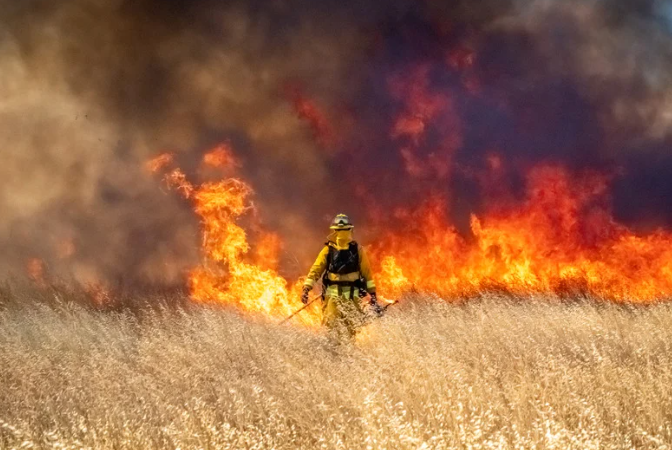
Extreme weather and natural disasters
Weather conditions and temperatures have changed significantly across the U.S., making it difficult to plan, manage, and stick to your seasonal cycles. The past few years have seen a marked increase in:
Hurricanes, tornadoes, floods, and severe storms
Droughts and extreme heat
Early of late freezes or frosts
Wildfires
Earthquakes
These extreme conditions can cause:
Crop damage or destruction
Dramatically reduced harvests
Inaccessible fields
Housing and/or transportation damage
The potential impact on your H2A Program obligations may include:
Modified work duties
Reduced hours and wages
Reduced contract period
Difficulty in satisfying the 3/4 Guarantee
Housing availability
Transportation access/availability
The reality is, even when circumstances halt, delay, or altogether stop production, your expenses and H2A Program obligations continue.
For example:
Say you request 30 H2A Program workers for a 10-week harvest. Two weeks into the contract, a hurricane destroys 70% of the crop. Suddenly you have nowhere near enough work for 30 people. But you can’t just tell the workers there’s no more work and send them home.
What you can do to minimize your risk/liability
Crop insurance should cover your crop loss, but what about your obligations to workers? DOL recognizes that an unforeseeable catastrophic event such as fire, weather or another natural disaster can make fulfillment of the Job Order impossible.
Contract Impossibility is a specific H2A Program provision, 20 CFR § 655.122(o), that can allow ag employers to end an H2A Program worker's contract before the certified end date when an unforeseeable event beyond the employer's control makes fulfillment of the contract impossible. Circumstances that simply make fulfillment expensive wouldn’t qualify.
3 critical elements must exist:
Something happened that’s outside the employer’s control
The event makes the promised employment impossible
DOL’s Certifying Officer determines that the circumstances qualify
Here’s the contract impossibility process:
Step 1: An extraordinary event occurs—something that significantly changes your ability to provide the employment committed to in the ETA-790.
You should document what happened and how it affects the Job Order.
Step 2: Don’t assume the event automatically terminates the H2A Program contract.
Unless you get permission to end the contract early, workers continue to have rights under the original contract.
Step 3: Seek a determination from the DOL’s Certifying Officer. USA Farm Labor communicates with DOL on our clients’ behalf.
The DOL’s Certifying Officer determines whether the circumstances qualify, based on:
The worker’s services are no longer required
For reasons beyond your control, and
Fire, weather, or another Act of God makes contract fulfillment impossible
You should be prepared to document:
What happened
When it happened
Why it was outside your control
How the event affected the farm
Why the workers’ services are no longer required
Why you can’t reasonably continue the certified work
How many workers are affected
How much of the crop/work remains
What work, if any, remains available
What steps you’ve taken to mitigate the situation
Documentation may include: photographs, insurance documentation, crop-loss assessments, weather reports, country/state emergency declarations, production records, and communications with customers
Step 4: You’re still responsible for honoring the 3/4 Guarantee—but only through the termination date of the contract as determined by DOL.
Step 5: You have additional transportation/transfer obligations.
You must make efforts to transfer the worker to other comparable employment acceptable to the worker. If a transfer isn’t made, you must provide/pay for transportation back home as well as subsistence.
Examples
Likely candidates for a contract-impossibility request:
Hurricane destroys the crop
Tornado destroys the farm's production facilities
Wildfire destroys the crop or makes the farm inoperable
Flooding makes the farm inaccessible
Catastrophic weather event destroys the crop before harvest
Fire destroys facilities necessary to perform the certified work
Not automatically contract impossibility:
Commodity prices fall
The crop becomes unprofitable
You simply need fewer workers
You overestimated your labor needs
A customer cancels an order
You have cash-flow problems
Crop or livestock disease or pest outbreak
These conditions can cause:
Crop/herd quarantine or destruction
Inability to harvest
Restricted access to barns or facilities
Herd depopulation
Production interruption
Herd movement restrictions
Reduced herd
The potential impact on your H2A Program obligations may include:
Modified work duties
Reduced hours and wages
Reduced contract period
3/4 Guarantee
What you can do to minimize your risk/liability
Here are key questions to ask:
What does the outbreak do to the certified job opportunity?
Does it rise to the level of contract impossibility?
Is production merely reduced and there’s still work available or has it eliminated the crop/livestock, so production is stopped temporarily?
How will the disruption affect available hours?
Key points:
Just because there’s less work than anticipated doesn’t eliminate your obligation, including the 3/4 Guarantee
While a disease or pest outbreak can be financially devastating, it doesn’t necessarily qualify as contract impossibility
Especially with livestock, you need to distinguish between “the operation has changed” and “the certified job has become impossible”
If the outbreak will just cause delays, you can get a two-week extension if delays happen toward the end of the season
If the entire remaining crop is destroyed, you can seek a contract impossibility determination from the DOL’s Certifying Officer
A disease or pest outbreak isn’t automatically a qualifying event just because it’s unexpected
You’ll need to establish that the outbreak:
Was outside your control
Was sufficiently serious/catastrophic
Made the certified work impossible or eliminated the need for the workers
Wasn’t just a business or economic decision
If a contract impossibility is approved, you’ll still be obligated to honor the 3/4 Guarantee through the contract termination date, as well as the worker transfer/transportation costs as detailed in the weather scenario above
For example:
A disease causes a farm to temporarily quarantine its herd.
The workers can still perform:
feeding
cleaning
sanitation
animal monitoring
The existence of a disease doesn't necessarily eliminate the H2A Program jobs. In fact, some workers may be needed more than before because of additional biosecurity and sanitation requirements. On the other hand, if a mandatory depopulation order eliminates the animals and therefore eliminates the certified work, the employer may have a substantially stronger basis for seeking contract-impossibility relief.
One word of caution: Be careful about changing workers’ duties. It can be tempting to simply find something else for the H2A Program workers to do. But whether that work is permissible and within H2A compliance depends on the Job Order and applicable H2A rules and regulations. This is where the advice of an H2A agency like USA Farm Labor can be invaluable.
As with any event or incident, documentation is critical, including:
The outbreak:
Date discovered
Disease/pest identified
Who identified it
Testing/lab results
USDA/state/local agricultural authority involvement
Quarantine or destruction orders
Government communications
The impact on production:
Acres affected
Percentage of crop affected
Animals affected
Number of animals destroyed, if applicable
Expected remaining production
Expected duration of interruption
The H2A Program impact:
Number of workers affected
Job duties affected
Worksites affected
Expected reduction in hours
Expected duration
Whether alternative certified work exists
Your response:
Steps taken to mitigate the impact
Alternative work considered
Communication with workers
Communication with the H2A agency/attorney
Communication with DOL/CO, if applicable
Equipment, power, or irrigation breakdown
These conditions can cause:
Halt in planting and/or harvesting operations
Crop damage
Facilities, irrigation, refrigeration, or processing stop functioning
The potential impact on your H2A Program obligations may include:
Hours and wages
3/4 Guarantee
Housing availability
Transportation access/availability
What you can do to minimize your risk/liability
Here are key questions to ask:
Is this a temporary operational interruption or is fulfillment of the certified H2A Program contract impossible?
How long is the interruption expected to last?
What agricultural activities can continue?
Can you provide other permissible work while repairs are made?
Can you offer other duties that would still be allowable given the certified Job Order and H2A rules and regulations?
Is worker housing and/or transportation affected?
Key points:
Just because there’s less work than anticipated doesn’t eliminate your obligation, including the 3/4 Guarantee
If the shutdown and/or repairs will just cause delays, you can get a two-week extension if delays happen toward the end of the season
If the failures destroy the entire remaining crop and make the entire certified operation impossible, you can seek a contract impossibility determination from the DOL’s Certifying Officer, but this would not be the norm
Failure of a deteriorating irrigation pump that wasn’t maintained is very different from a tornado that destroys the entire irrigation system overnight
If a contract impossibility is approved, you’ll still be obligated to honor the 3/4 Guarantee through the contract termination date, as well as the worker transfer/transportation costs as detailed in the weather scenario above

Market, cost, or H2A Program changes
These conditions can cause:
State minimum-wage increases
Prevailing wage changes
AEWR changes
Overtime obligations
Unexpected wage or operating cost increases
Unexpected/increased housing costs
Unexpected/increased transportation costs
Major crop-price decline
Loss of customers
Increased input costs
Commodity price collapse
Supply-chain problems
Harvest/production plan changes
Business restructuring
The potential impact on your H2A Program obligations may include:
Hours and wages
Payroll/budget compliance
3/4 Guarantee
What you can do to minimize your risk/liability
Here are key questions to ask:
What exactly has changed?
When does it go into effect?
How does it impact the H2A Program budget?
Can the certified Job Order be fulfilled?
If the economics genuinely make continued operations impossible, seek professional advice from your H2A agency and/or attorney
Key points:
These events may make your H2A Program workforce substantially more expensive than anticipated, but they don't automatically eliminate your H2A contractual obligations
Market conditions are generally not eligible as a contract impossibility
You need to distinguish a government-mandated change (prevailing wage increase, new housing requirements) from a voluntary business decision (financing costs increase, crop prices fall)
DOL says if the applicable prevailing wage is adjusted during the work contract and the new prevailing wage is higher than the other applicable wage rates, you must pay the higher prevailing wage. If it’s lower, you must continue paying the rate guaranteed in the Job Order.
Wage increases affect not only the hourly rate but factor into the 3/4 Guarantee as well
Bottom line questions for H2A Program employers
Can you still provide the promised work?
Can you still provide the promised wages/hours?
Can you still provide compliant housing and transportation?
If you can't, have you contacted your H2A Program agency/attorney and DOL before taking action?
Lean on USA Farm Labor to steer you in the right direction
USA Farm Labor takes a compliance-first approach to the H2A Visa Program. Our expert team supports you all season long and we’re here to help answer the tough questions while helping you maintain H2A compliance.
