

Can Ag Employers Get H2A Farm Labor for Livestock Beyond Grazing Season?
The H2A Visa Program fills an ever-growing farm labor gap for American ag businesses. The vast majority of agricultural employers that participate in the H2A Program do so to provide much-needed farm labor to support crop production. But H2A rules and regulations don’t limit the number of H2A applications a farm business can have.
Even if you already have a Temporary Labor Certification for your crops, you may qualify for a separate certification to help support your livestock during the colder months. Justifying the need for additional H2A applications is challenging but not impossible. USA Farm Labor’s expert team specializes in handling these unique circumstances. This blog is designed to help ag businesses understand the requirements and risks of applying for an H2A Program application for livestock.
Why livestock?
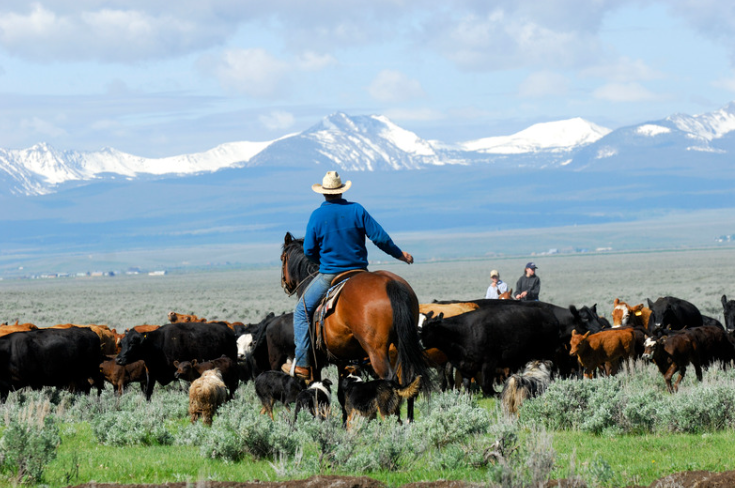
While out to pasture, your livestock are somewhat self-sufficient. They pretty much roam the pasture, graze, and sleep. But when they come in during the colder season, and especially during calving season, they require much more hands-on attention. This creates an above-normal workload and need for farm labor with specific skills that typically differ from those required for crop harvest.
3 core requirements for H2A applications for livestock
Your H2A livestock application must include a clear, accurate justification of your need for additional, unique farm labor. Specifically, your H2A application for livestock must satisfy the following three requirements:
You have a legitimate seasonal need for additional labor that’s tied to a certain time of year by an event or pattern (i.e. livestock coming in from the pastures).
The workload and farm labor requirements far exceed those for your normal ongoing operations.
The skills needed for this additional farm labor, and the job duties they’ll be required to perform, are different and unique from those detailed in your primary crop application. If there are overlapping skills or tasks on both applications, it wouldn’t qualify as a temporary need.
How to justify and prove your need for livestock farm labor
Proving your need for livestock farm labor involves providing details across several aspects of your farm operations:
Proving seasonality
Since the H2A Visa Program is designed to provide temporary, seasonal farm labor, you must prove that your need under this application is both temporary and seasonal. This includes providing answers to questions like:
Why is this type of work only done during this period?
Why is this type of work not done during the rest of the year?
Proving an increase in workload above the norm
In addition to proving the temporary and seasonal nature of your need, you must also prove that your farm labor needs during this period are over and above what’s needed to maintain normal farm operations throughout the year. This could include providing a workload chart that details the types of tasks and hours of specific farm labor needed throughout the year, to demonstrate how it varies and increases during this specific need timeframe.
Proving the unique skills required
In addition to seasonality and workload, you must also prove that the tasks required for your livestock app are different from those listed in your primary crop Job Order and the skills required are unique to this period of need. For example, calving can provide a strong justification during certain months, often February through April.
Here are some typical livestock-specific skills and tasks required during the colder months:
Moving cattle home from summer pasture around October or November
Prepping barns and cattle for calving
Feeding cattle
Vaccinating cattle
Branding cattle
Moving cattle back to summer pastures around late May, early June
If any of the tasks or duties on your livestock app are also on your crop app, it’s considered a year-round need and isn’t eligible for the H2A program.
Sensitive areas that require close attention
Here are a few areas that may jeopardize your eligibility for a livestock app, depending on how/if they’re included in your crop app. This is where our Case Managers’ experience and attention to detail are invaluable.
Grain hauling—Most crop applications involve some sort of driving tasks, such as transporting crops to elevators. This can cause potential overlaps or issues with grain hauling tasks included in a livestock app.
Farm equipment/machinery repair—If your crop season’s Job Order mentions even incidental repairs, it implies a year-round need. If your crop app doesn’t include any sort of maintenance or repair, even lubricating or oil changes, you may be able to include mechanical tasks.
Similar or overlapping skills or job duties—As mentioned in the above section, if the skills or job duties are in both your crop and livestock applications, they’ll be considered year-round and not eligible for the H2A Visa Program.
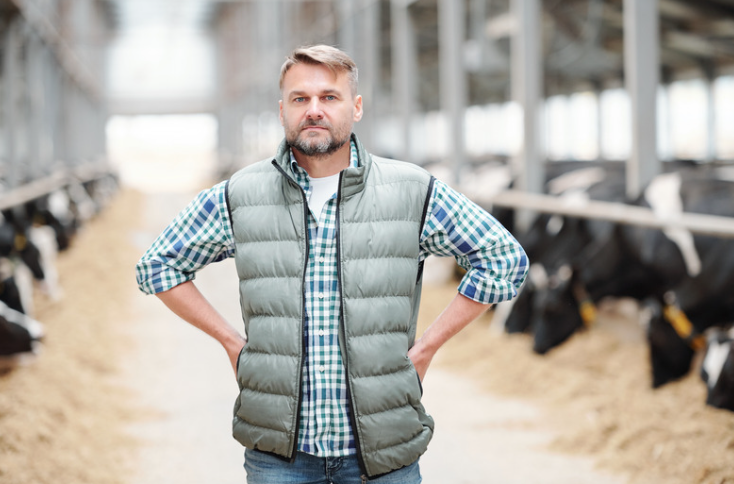
Working with dairy cows on dairy farms—Milking cows and routine dairy operations are generally not eligible for the H2A Visa program because they represent a permanent, year-round labor need rather than a temporary or seasonal need. However, a dairy operation may qualify for H2A certification for duties that are temporary or seasonal in nature. Examples include crop production, forage harvesting, hay and silage operations, seasonal livestock-related activities, and winter agricultural construction or maintenance projects such as barn cleaning, barn maintenance, fence construction, fence repair, and other temporary agricultural improvements. The key factor is that you must demonstrate a temporary or seasonal labor need that exists beyond your farm's normal year-round workforce requirements.
It’s important to note that government talks and proposals are underway to expand the eligibility for ag operations with year-round requirements.
Timing is everything
Depending on your geographic location and weather cycles, the typical time to submit an H2A application for livestock is from June through September. Typical livestock season start dates are November or December and the season runs through March.
USA Farm Labor specializes in livestock farm labor apps
It can be risky submitting an H2A Program application for livestock, given the stringent H2A rules and regulations. Having an expert by your side can make all the difference.
While the DOL sees many farm labor needs associated with livestock as year-round, USA Farm Labor has a proven track record in getting H2A applications for livestock farm labor approved while maintaining H2A compliance. Our Case Managers know what’s required to make sure your documents, justification, and application are approval-ready.
USA Farm Labor’s expert team knows how important livestock help during the colder months is for your ag operation. We’re here to get you the seasonal, skilled farm labor you need.
