

USA Farm Labor’s Advocacy Drives Operational Improvements for H-2A Employers
USA Farm Labor has a proven history of advocating for both H-2A employers and H-2A workers. For example, as increased scrutiny developed around CDL-related duties and transportation language contained within Job Orders, USA Farm Labor worked to help H-2A Program employers better understand compliance obligations, reduce unnecessary risk exposure, and protect workers from being placed into duties outside the scope of approved employment.
We make it our business to educate H-2A employers, recruiters, and workers on evolving H-2A compliance obligations and worker protections under the H-2A Program. This includes developing operational guidance, compliance resources, onboarding education, and practical implementation strategies designed to help employers stay compliant while also improving transparency and understanding for workers participating in the H-2A Visa Program.
Most recently, USA Farm Labor got to work addressing issues that have led to significant visa processing delays. This included engaging with the National Council of Agricultural Employers (NCAE) and the U.S. Department of State (DOS) as well as direct coordination with the South African consulates.
This blog is designed to educate ag business owners and H-2A Program employers on the level of commitment USA Farm Labor has to addressing obstacles and being a force for positive change in the H-2A Visa Program. This article also details the specific actions taken to improve visa processing timeframes as well as the clarification and operational improvements that resulted from these actions.
USA Farm Labor escalates visa processing challenges
In March 2026, USA Farm Labor formally escalated widespread H-2A visa processing challenges in South Africa to NCAE. These challenges were the result of three key factors—appointment delays, inconsistent documentation requirements, and increased scrutiny of driving-related job duties.
USA Farm Labor’s submission provided detailed, data-driven insight into:
Appointment backlog timelines across Johannesburg, Durban, and Cape Town
Inconsistent interpretation of ETA-790 job duties, particularly related to truck driving
Increased requests for police clearances and driving records for non-CDL roles
Operational impact on U.S. agricultural employers due to delayed worker arrivals
NCAE elevated these concerns directly to the DOS, resulting in immediate engagement with Mission South Africa. As reflected in NCAE leadership’s response:
The DOS acknowledged the issues and began coordinating corrective actions
South Africa consulates increased H-2A visa appointment capacity
Expedited request approvals began to improve
Internal efforts were initiated to standardize commercial driver screening and vetting
Additional clarification on documentation requirements was committed to be distributed to recruiters and agents
This response confirmed that detailed, field-level reporting from USA Farm Labor directly contributed to federal-level action and policy adjustment.
Operational impact of advocacy:
Increased appointment availability, particularly in Johannesburg
Improved processing timelines for interview waiver cases
Reduction in bottlenecks caused by inconsistent documentation requests
Movement toward standardized adjudication practices across consulates
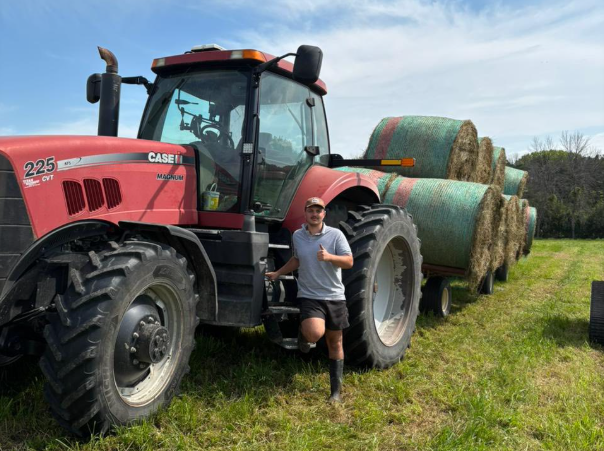
USA Farm Labor engages directly with South African Consulates to clarify truck driving requirements
On April 30, 2026, USA Farm Labor conducted a coordinated meeting with adjudicators from all three U.S. consulates in South Africa:
U.S. Consulate General Johannesburg
U.S. Consulate General Cape Town
U.S. Consulate General Durban
The purpose of this meeting was to obtain direct clarification on evolving adjudication standards, particularly regarding truck-driving language and CDL-related documentation requirements.
Prior to the meeting, the consulates’ interpretation was as follows:
Any reference to “truck driving” triggered additional scrutiny
Officers were proactively reviewing job descriptions for driving-related duties
This was tied to heightened federal scrutiny on commercial driving roles
As a result, workers were frequently being asked to provide the following, even when the role didn’t involve CDL-level driving:
Police clearance certificates
Driving records such as eNatis or MIE
CDL-related supporting documentation
Additional driving history information
Operational impact of advocacy:
USA Farm Labor requested direct clarification on whether explicitly stating that a CDL is not required would eliminate documentation requests. The consulates confirmed that, in these cases, they wouldn’t require additional documentation.
USA Farm Labor now includes standardized language in all Job Orders to protect workers from having to provide additional documentation when it’s not needed
Clarification on the preferred consular post—Johannesburg is now the recommended processing location due to increased capacity, faster interview waiver processing, and quicker passport return times
Clarification on interview waiver requirements:
Applicants must include a printed ETA-790
Addendum C must be included if referenced
Job descriptions must be clear and legible
Work contracts alone aren’t sufficient
Clarification on police clearance strategy—recommended upfront when:
Truck driving is listed
DUI or criminal history exists
Any potential driving-related concern is present
Acceptable driving records include eNatis and/or MIE
Overall expected impact:
Elimination of unnecessary police clearance requests
Reduction in driving record documentation requirements
Fewer interview delays and administrative holds
Improved visa issuance timelines
Preservation of interview waiver eligibility where applicable
Strategic H-2A Visa Program outcomes
The combined efforts of USA Farm Labor’s field reporting, NCAE advocacy, and direct consular engagement resulted in:
Federal-level awareness and response from the DOS
Increased visa processing capacity in South Africa
Movement toward standardized adjudication practices
Clear operational guidance for drafting ETA-790 job descriptions
Immediate, implementable solutions to reduce delays
The above represents a strong example of how coordinated advocacy, supported by detailed operational data, can directly influence H-2A Visa Program policy interpretation and improve outcomes for H-2A Program employers and workers. You can count on USA Farm Labor to continually look for ways to improve the H-2A Visa Program and make things easier, more efficient, and less risky for H-2A employers.
