

Proven Tips for Finding, Interviewing, and Hiring Workers Under the H-2A Visa Program
As a farm or ag business owner participating in the H-2A Visa Program, getting your Temporary Labor Certification is only half the battle. You still have to find and hire foreign, seasonal workers that fit your needs. This blog provides helpful tips on how to source, interview, and hire workers who will be an asset to your farm and help make your season a success.
Your 3 options for finding foreign, seasonal workers
Here are the three main ways you can go about sourcing foreign, seasonal workers:
Option #1: Do it yourself
This option obviously involves the most effort on your part. While you can ask other farm owners for referrals or contact foreign recruiters, you’re still responsible for making sure all candidates fit your criteria, verifying all their details, filing visa petitions, and handling consulate and travel logistics. You may also be legally responsible for recruiter conduct under the Department of Labor (DOL) rules.
Option #2: Pre-select known, previous, or returning workers
Some of our clients identify specific workers they’d like to hire. They may know about these workers as a result of:
Word-of-mouth from other farm owners or workers (perhaps friends or family members)
They’ve hired these workers for previous certifications/seasons
This is perfectly fine and, if you have previous experience with the workers, you already know their level of training and skills. Just be aware of the following:
The worker(s) you’ve selected may not always be available
While USA Farm Labor will do everything we can to get pre-selected workers for you, there’s no guarantee. There’s always a chance you may not get that specific worker due to domestic recruitment requirements and the 50% Rule that stipulates:
You still have to publicize your jobs through the Office of Foreign Labor Certification’s (OFLC) electronic job registry (SeasonalJobs.dol.gov)
You still must contact and interview all domestic applications that apply or are referred by your State Workforce Agency (SWA), and must hire any that are able, qualified, and available, up until the halfway point of your contract period
If the worker(s) are still in their home country and/or not already registered with USA Farm Labor, they’ll need to create a profile with one of our foreign recruiters or in-country liaison to get added to our proprietary Database
Workers will still need to schedule an appointment at the consulate to interview for their visa
If the worker is denied a visa for any reason, our recruiters can recommend a different worker who fits your needs
Option #3: Use an H-2A agency
Relying on an H-2A agency to find skilled, seasonal foreign workers can remove a huge burden from your shoulders—but it’s important to know that recruitment support varies across agencies. Before you choose an H-2A agency, be sure to ask if they:
Facilitate your contact with recruiters abroad?
Maintain a database of pre-screened, skilled candidates?
Enable you to filter candidates by specific skills?
Provide any support for interviewing candidates, scheduling consulate appointments, or handling travel logistics?
Many H-2A agencies simply supply you with a list or workers, leaving you to do all the screening and verification. USA Farm Labor partners with a global network of recruiters that verify worker skills, resumes, and references before creating a detailed profile in our proprietary Database. We placed 4,012 workers in 2025 with 93% of these being successful placements
Defining the details arounds your worker requirements
According to data from the U.S. Department of Agriculture (USDA), while the total number of approved H-2A workers increased by 56% between FY 2018 through FY 2023, the types of workers stayed relatively consistent. The vast majority (87%) were in the farmworkers and laborers, crop, nursery, and greenhouse categories. The next most common during this same timeframe were agricultural equipment operators.
What are SOC codes?
H-2A job tasks and descriptions are classified using job (SOC) codes that describe the core duties. The majority of approved H-2A workers fall under one of these five main SOC codes:
Graders and sorters, agricultural products (code: 45-2041)
Agricultural equipment operators (code: 45-2091)
Farmworkers and laborers, nursery, crop, and greenhouse (code: 45-2092)
Farmworkers, farm, ranch, and aquacultural animals (code: 45-2093)
Packers and packagers, hand (code: 53-7064)
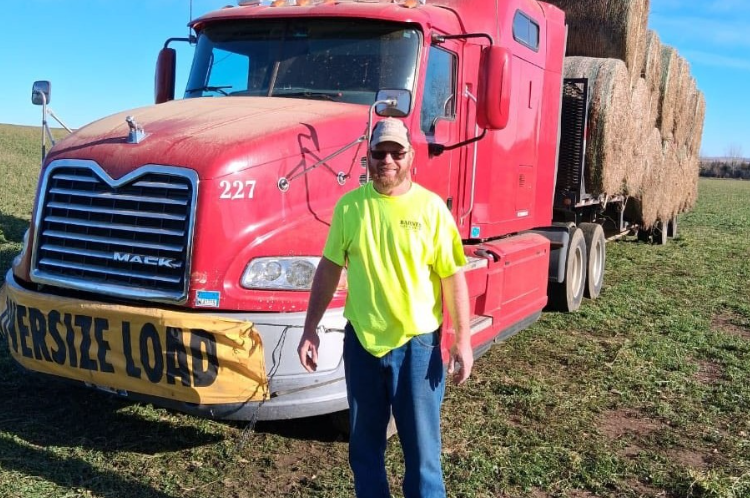
USA Farm Labor specializes in helping farm and ag business owners find and hire foreign workers with advanced skills, such as ag equipment operators. According to USA Farm Labor CEO Manuel Fick, “Our clients need more than just a ‘warm body’, simple laborer or picker—they need skilled workers to perform complex farm jobs like driving farm trucks and operating equipment like tractors. The problem was that our clients simply don’t have time to train a worker to perform these jobs; they need someone ready to hit the ground running,” Fick explains. It’s not that farmers don’t require basic labor, such as fruit and vegetable pickers; they do. But, farmers also need seasonal workers to:
Drive trucks around the farm and to the grain elevators/bins
Operate expensive, complex farm equipment
Run and service tractors, combine harvesters, sprayers, and irrigation pivots
Connect and disconnect tractor attachments and tools
Perform regular service on attachments and equipment
Maintain farm buildings and grounds
Ag equipment operators and drivers need a diverse technical skill set, which is where our partnership with USA Truck Labor comes in. They provide comprehensive worker training that includes equipment operation, truck driving, technology, repair and maintenance, safety, and more. They also test and verify worker skills and competencies, so you can hire with confidence.
As a result, we often process Job Orders (ETA-790s) with the following SOC codes:
Heavy and tractor-trailer truck drivers (code: 53-3032)
Construction laborers (code: 47-2061)
Farm equipment mechanics and service technicians (code: 49-3041)
Experience
Some of our clients want experienced workers, others prefer to train workers themselves to avoid having to deal with bad habits developed on previous job sites. The amount of experience you require is up to you. Just be aware that recent revisions to the way the Adverse Effect Wage Rate (AEWR) is calculated take into account skill level and job complexity. The AEWR is the minimum you must pay H-2A workers, unless the state’s minimum wage is higher. In that case, you’ll have to pay the state minimum wage. Under the new AEWR structure, Level 1 is considered minimal (less than two months) or no experience. Level two is considered having three or more months of experience and/or certifications, such as a CDL.
In-Country vs. Out-of-Country
You can choose workers that will be coming from their home country (Out-of-Country), or ones that are already here in the U.S. (In-Country). In-Country transfers can typically begin work sooner but the number of workers available is dependent on how many workers are leaving other farms. Out-of-Country workers take a bit longer to get there, but USA Farm Labor had more than 4,000 verified workers available in 2025 that didn’t get hired.
In 2025, nearly 90% of H-2A workers came from Mexico, 5% from South Africa, with the remainder coming from Central and South America. Either way, when you partner with USA Farm Labor, all workers must be registered with one of our recruiters, verified, and have a profile created in our Database.
9 interviewing tips for finding your best-fit workers
Interviewing H-2A workers is a bit more challenging considering you have a short amount of time to validate skills, experience, reliability, coachability, and more while working to bridge long distances, language barriers, and cultural differences. These interviewing tips will help you gain as much information as you can, so you can make an informed decision.
Tip #1: Create a detailed job breakdown before the interview
Farm work encompasses a wide range of tasks and duties. The more you can drill down and describe the details of the job, the better. Include types of crops (soybean, corn) and livestock (beef cattle), specific tasks (harvesting, pruning, irrigation, etc.), physical demands (lifting, bending), hours, and pay structure. This makes sure you and your workers are on the same page from the start.
Tip #2: Prepare structured, consistent questions
Using the same list of questions for each interview allows you to compare candidates based on apples-to-apples criteria, and also provides consistency for compliance. Examples of questions include:
“What brought you to look for a job in farming/agriculture?”
“Which crops/livestock have you worked with before?”
“What equipment have you used?”
Tip #3: Focus on proven experience
It’s easy to claim having certain skills. But proving it is another matter. There are two key ways to flush out the candidates that can talk a good game from the ones that have actually done the work.
The first is asking specific open-ended questions versus general questions that can be answered with a simple yes or no. For example, instead of asking if they have experience, ask for details, such as:
“How many acres did you harvest per day?”
“What types of farm equipment have you driven/operated?”
“What specific tasks did you perform on the cattle farm?”
Skilled workers can give you specific numbers and details—unskilled ones usually can’t.
The other way to determine their actual experience and capabilities is to ask them to walk you through various real-life scenarios that may happen on your farm. This gives you a glimpse of their attitude, adaptability, and problem-solving abilities. For example, ask them:
“What would you do if crops were damaged by unexpected frost?”
“If you were driving a tractor and X, Y, or Z happened, what would be your initial course of action to resolve it?”
“What would you do if a supervisor corrected your work?”
If applicable, you’ll also want to verify previous H-2A Program experience by asking specific questions such as:
“Where have you previously worked in America (farm name, state)?”
“How did you leave your last position?”
“Were you invited to return back to a previous H-2A employer’s farm?” “If not, why not?”
Tip #4: Assess their reliability and work ethic
Reliability and coachability might be even more important than specific skills when it comes to good farm workers. Find out if you can count on candidates by asking questions like:
“Have you ever left a contract early? Why?”
“How many days did you miss last season?”
“How do you deal with long workdays during peak season?”
Tip #5: Don’t forget about personality and preferences
Be sure to ask a few questions that’ll give you insights into the worker’s individual preferences and expectations. For example:
“Can you share a few of your proudest achievements (personal or professional)?”
“How do you like to spend your free time?”
“How do you learn best (i.e. oral instruction, written instruction, hands-on)?”
Tip #6: Check references (when possible)
Contact previous employers if you can to get their perspective on the candidate’s skills, experience, attitude, and reliability. Even informal conversations with crew leaders or foremen can be very informative.
Tip #7: Think long-term
One of the goals of hiring H-2A employees is to create a pipeline of predictable labor, year after year. Interview more candidates than you need, take detailed notes, and keep a shortlist for the future. Having a reliable pool of return workers helps you with seasonal planning and saves you money on recruiting and training. Find out if candidates are looking for just one season or are thinking more long-term by asking:
“Are you looking for a job for just this season, or are you looking for long-term income?”
“Would you return to the same farm if offered?”
“What makes a farm a good place to come back to?”
Tip #8: Be cautious of red flags
Take note of behaviors and responses that could signal issues post-hire. Specifically, tread carefully if the candidate:
Gives vague or inconsistent answers
Avoids discussing past employers
Has a history of incomplete contracts
Overpromises (“I can do everything”)
Tip #9: Score candidates immediately after interviews
If you’re asking all candidates the same structured, consistent questions, you should be able to create a rating system to effectively compare them and identify the standouts. Scoring them immediately is best while the conversation is fresh in your mind. Rate each candidate on a simple 1 - 5 scale in each of the following areas:
Skill level (you may want to create separate ratings for specific experience, skills, crops, or livestock that are most relevant to your operation)
Reliability
Attitude
Communication
Problem-solving
Long-term goal

Hiring workers
Deciding whether to hire a worker is entirely up to you. USA Farm Labor clients can begin interviewing and hiring immediately after submitting their application to us. Our Database facilitates doing both and provides as much information as possible to help you make the best possible decision. Once USA Farm Labor receives a Temporary Labor Certification from the DOL and a USCIS petition is completed and approved, then the worker can post to the consulate or attend an in-person interview (if required). Remember, as the H-2A employer, you’re responsible for the worker’s travel expenses to and from the consulate, as well as subsistence during travel. Our dedicated recruiters guide the workers you hire through the entire consulate process, including making appointments and assisting with travel arrangements.
Count on USA Farm Labor for a predictable, effective seasonal labor solution
USA Farm Labor not only streamlines and manages the process of getting your Temporary Labor Certification, and helps you stay compliant with all the H-2A Program requirements, we make it easy for you to find and hire foreign, seasonal workers that meet your needs. This is possible because of the ongoing investments we make in expertise, technology, and partnerships.
These investments allow you to:
Easily build detailed job descriptions—Quickly create comprehensive, detailed job descriptions using our Database Job Builder
Get worker skills and experience verified for you—Our global network of compliant recruiters thoroughly screen each worker by verifying skills and prior experience through direct reference checks and validation processes. Plus, workers are able to take knowledge exams for a wide range of skills—diesel mechanic, crop spraying, and irrigation to name just a few. All this information, including worker’s exam scores, is at your fingertips in our Database.
Receive relevant candidates—Based on your open jobs, our recruiters push you relevant candidates in our Database of 5,000-plus verified workers
Easily find the candidates you’re looking for—In our Database, you can quickly filter available workers by specific traits and skills
Quickly identify candidates with driving experience—Our partner, USA Truck Labor, trains and verifies workers’ skills on everything from safely operating an American-style semi-truck and U.S. transportation laws to practical techniques such as parking, connecting trailers, and inspections. Candidates who successfully complete the training are easily identified by a truck badge indicator.
Easily find candidates with U.S. experience and references—Quickly identify workers with U.S. experience and a positive reference (U.S. flag indicator) as well as workers with a highly rated U.S. reference (verified shield indicator)
Get a complete picture before the interview—View comprehensive profiles for each candidate that include verified resumes, video CVs, references, work history, skills, education, personality and values assessments, and more
Easily schedule interviews—The Database allows you to request interviews with candidates, choose a time and format, even provide interview feedback for recruiters as to why the candidate is or isn’t a good match
Seamlessly hire (and rehire) the top candidates—Through the Database, you can extend job offers, view flight and transportation details, and easily identify current workers to extend offers for the following season
