

A Practical Guide to the H2A Visa Program Announcement for Dairy Operations
Ag operations increasingly depend on the H2A Visa Program to provide the temporary, seasonal farm labor they can’t find domestically. Dairy operations have historically been excluded, as a category, from participating in the H2A Program because they were viewed as having year-round labor needs. On June 17, 2026, the United States Citizenship and Immigration Services (USCIS) issued Policy Memorandum PM-602-0200, "Guidance on Temporary or Seasonal Need for H2A Petitions for Dairying."
This announcement has most dairy operations questioning how exactly this impacts their ability to use H2A labor. This blog is designed to give dairy farm operations practical guidance in the wake of this change.
What was the announcement?
In a nutshell, USCIS clarified that dairying has always been included within the statutory definition of agricultural labor and that dairy-related H2A petitions must be evaluated under the same temporary and seasonal need standards that apply to all H2A employers.
The practical impact of this guidance is that dairy operations are no longer viewed as categorically ineligible simply because milk production occurs year-round. However, employers must still establish a bona fide temporary (defined as less than one year) or seasonal labor need. Under the new guidance, USCIS will evaluate H2A petitions for dairy-related work on a case-by-case basis "based on the employers' demonstrated temporary or seasonal need," a statement from the U.S. Department of Agriculture said.
What has changed?
Historically, most dairy operators believed the H2A Visa Program was unavailable to them because:
Dairy production occurs year-round
Milking occurs every day
Cattle require continual care
As a result, many dairy employers never applied for the H2A Program. USCIS has now formally stated that:
Dairy labor is agricultural labor
Dairy labor can qualify for the H2A Visa Program
Temporary and seasonal need standards still apply
Each petition must be reviewed individually
Dairy petitions are subject to the same scrutiny as any other H2A petition
The focus is no longer on whether dairy is a year-round industry. It’s on whether the need for H2A labor is temporary or seasonal.
What hasn’t changed?
USCIS did not:
Create automatic H2A Visa Program eligibility for dairy farms
Authorize year-round dairy labor under the H2A Program
Approve permanent dairy worker positions
Create a special dairy exemption
Eliminate the temporary need requirement
The temporary need requirement remains fully intact. This requires justification for why the type of work being requested is only done during this period and not during the rest of the year.
What does the change really mean for dairy operations?
USCIS repeatedly emphasizes that the occupation itself doesn’t determine H2A Program eligibility. Whether or not the employer's labor need is temporary or seasonal determines eligibility.
Examples of jobs that may qualify:
A dairy herdsman
A temporary milking worker
A livestock support worker
A calving worker
However, those same positions may also be denied. The determining factor is not the job, it’s whether the employer can prove that their need for H2A labor is temporary or seasonal.
According to the policy memo, "Dairy cows are typically milked for approximately 10 months after calving before they are 'dried off' for two months before calving again. For dairies that implement distinct breeding seasons each year, employers may be able to file separate H2A petitions (for up to 10 months each) for dairy herdsmen for each calving season to provide the needed labor to address the different needs by the employer in relation to the cadence for the cattle in each herd."
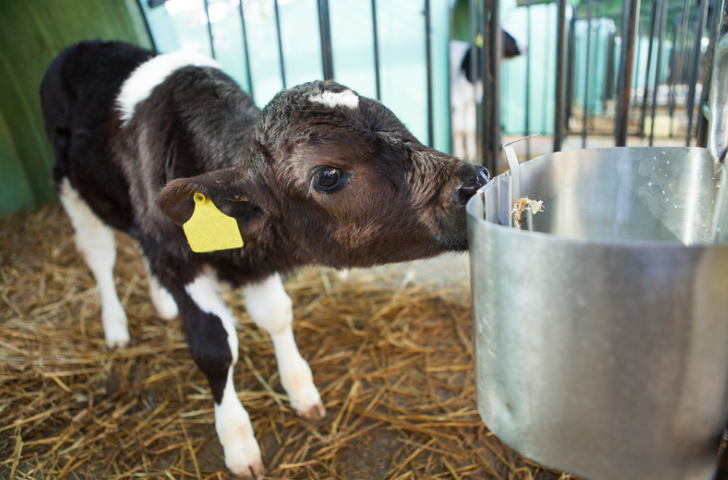
Possible scenarios for H2A eligibility
Seasonal calving operations: Employers operating concentrated calving periods may have stronger arguments for temporary labor.
Examples include:
Spring calving periods
Fall calving periods
Seasonal herd expansions
Seasonal breeding support
These operations align closely with the examples provided by USCIS.
Dairies with distinct seasonal duties: USCIS specifically discusses situations where workers perform different duties during different seasons. Examples include:
Spring and Summer:
Pasture management
Calving support
Herd expansion activities
Fall and Winter:
Different herd management functions
Different feeding requirements
Different operational activities
Even where some duties, such as milking, remain constant, USCIS acknowledges that substantially different seasonal responsibilities may support separate H2A applications.
High-risk scenarios
The guidance contains several situations that will send a red flag during the H2A application process, prompting increased scrutiny. These include:
Year-round milking positions: An employer stating, "We milk cows every day and need workers all year.", doesn’t describe a temporary labor need. It describes a permanent labor need.
Back-to-back filings: USCIS specifically warns that consecutive petitions covering substantially identical duties may indicate a permanent need.
Examples include:
January through October: Milking workers
November through August: Milking workers
September through June: Milking workers
Repeated filings with no meaningful break may trigger denial.
Same duties every season: If the employer can’t articulate how labor needs change throughout the year, USCIS may conclude that the need is permanent. Providing answers to these questions can help justify a temporary, seasonal need:
What changes throughout the year?
Why are additional workers needed now?
What event creates the labor demand?
When does the demand end?
Why will these workers no longer be needed?
Key questions for dairy operations to answer before submitting an H2A application
Temporary need: What specific event is creating the labor demand?
Duration: How long will the labor need exist?
Workforce changes: Why can't existing staff perform the work?
Seasonality: Is this tied to:
Calving?
Breeding?
Seasonal production?
Herd expansion?
Feed production cycles?
Historical data: Has this need existed every year? If so:
During what months?
For how long?
What changes afterward?
Helpful documentation to support a dairy farm H2A application
Approval hinges on being able to justify that the H2A labor need is temporary and/or seasonal. Documentation is key to providing proof that the DOL and USCIS will be looking for.
Potential supporting evidence may include:
Calving schedules
Breeding schedules
Production records
Herd growth projections
Historical labor records
Seasonal staffing plans
Work schedules
Operational calendars
The stronger the documentation, the stronger the filing.
Lean on USA Farm Labor’s H2A experts
The most significant opportunity as a result of this announcement is that dairy farms may now apply and qualify for H2A labor when they can establish a bona fide temporary or seasonal labor need. Eligibility is determined by the facts of each operation, not simply because the business is a dairy. USA Farm Labor’s Onboarding Specialists can help you confirm if your farm labor needs qualify under the H2A Program’s eligibility requirements.
