

The H2A visa program is essential to having a profitable season for many U.S. farms and agricultural businesses. USA Farm Labor’s support for H2A employers doesn’t stop once you have a Temporary Labor Certification in hand and H2A workers on the way. Our team supports you and your workers throughout your entire season, to ensure each season is a success.
Even before your workers arrive, there are key steps you need to take as an H2A employer to prepare for worker arrival. Once they’re here, setting clear expectations and providing comprehensive onboarding is key to starting your H2A employees off on the right foot. This includes having your new H2A workers review and sign off on your company policies and approved Job Order, so they clearly understand what’s expected. We also recommend following a similar process for domestic workers.
Get a step-by-step pre-arrival and onboarding guide
Following a thorough onboarding process, you need effective day-to-day operational and management practices to maximize productivity, maintain compliance, and increase the likelihood your good workers will return. This blog is designed to provide H2A employers best practices and tips to ensure you’re not just running an efficient farm—you’re also running a defensible, compliant operation.
Good performance starts with you
As the owner or manager of an ag business, you establish the performance framework across the entire operation with your practices, policies, expectations, and standards. In a March 18, 2026, Farm Progress article, Farm labor crisis: Is no one willing to work anymore?, Cassidy Johnson of JRC Ranch Management and Consulting put it this way. “When we use words like culture, people say that’s a corporate word that doesn’t work for ranches. Here’s the thing, if you are not intentionally building some kind of culture or vibe or process, it is being built in the absence of that. If you are a manager or an owner, you are the thermostat,” Johnson said. “You set the tone for what you want to see.”

Best practices for effective H2A worker management
The overall goals of managing your H2A ag workforce should focus on maximizing efficiency, productivity and worker satisfaction while maintaining compliance. Smooth-running ag operations follow best practices that fall under three main categories—structure, staying proactive, and consistency.
Here are some practical, proven best practices within each of these categories to help ensure a productive, profitable season.
Provide structure
Set clear expectations from the start—Communicate standards on day one with in-depth onboarding that:
Explains job duties, daily schedules, and productivity expectations
Reviews safety protocols and equipment use
Clearly outlines rules (attendance, housing, conduct)
Maintain good housing & living conditions—Your workers’ environment impacts their morale which impacts their productivity. Keep morale and productivity high by:
Taking pictures of the housing condition before workers arrive and throughout the season
Keeping housing clean, safe, and well-maintained
Responding quickly to maintenance issues
Making sure workers understand the standards for clean housing and letting them know you’ll be doing inspections, how often, and why
Provide daily and weekly opportunities for open communication—Catch issues before they escalate by:
Holding short daily tailgate meetings every morning
Reinforcing weather, goals, and safety reminders
Encouraging workers to ask questions or raise concerns
Use a proactive approach
Always keep an eye on compliance—Conduct internal audits mid-season, not just at the end, that look at how well you’re:
Keeping accurate payroll records (hours, rates, deductions)
Following all housing, transportation, and wage requirements
Staying aligned with Department of Labor (DOL) regulations
Train crew leaders well—Prevent 80% of the most common issues by:
Training crew leaders in communication, conflict resolution, and compliance basics
Making sure they understand wage rules, breaks, and safety requirements
Holding them accountable for both results and worker treatment
Address problems early—Protect yourself in the event issues escalate into complaints or audits by:
Immediately correcting attendance or performance issues
Issuing written warnings when necessary
Documenting all incidents (discipline, injuries, disputes)
Keep a close eye on health & safety—Avoid legal and operational risks by:.
Enforcing hydration and heat illness prevention practices
Providing proper PPE and training
Immediately acting on injuries
Expect and plan for the unexpected—Plan ahead for possible delays due to bad weather, absenteeism, or equipment failure by:
Building buffer time into your schedule
Cross-training workers where possible
Having backup labor or contingency plans
Conduct an end-of-season review—Assess the season before workers leave by:
Evaluating productivity and crew performance
Identifying compliance gaps or issues
Making note of which workers you want to rehire next season
Be consistent
Establish standardized daily operations—Workers perform better when they know exactly what’s expected every day. Provide consistency by: (see SOP section below)
Having fixed start times, break times, and end times
Assigning team leads or crew bosses for accountability
Creating repeatable workflows for common tasks
Model a culture of respect & fairness—Reduce turnover, conflict, and absenteeism by:
Treating all workers consistently without favoritism
Avoiding language barriers by using translators if needed
Not allowing degrading, cursing, or threatening behavior
Recognizing and rewarding strong performance—simple acknowledgment and small incentives go a long way
Track productivity objectively—Avoid disputes by:
Tracking measurable things, such as attendance, no missing time punches, daily outputs, and contract completions
Using simple logs, whiteboards, or digital tracking tools
Sharing performance metrics regularly with workers

Daily Standard Operating Procedures (SOP) Blueprint
Establishing Standard Operating Procedures (SOPs) for your daily ag operation is one of the most impactful things you can do to ensure things run smoothly. If done correctly, it also aligns your daily practices around the key goals we mentioned at the beginning of this article: maximizing efficiency, productivity and worker satisfaction while maintaining compliance.
Here’s a detailed blueprint of all the specifics your ag business SOPs should cover. These items are primarily carried out by supervisors and crew leaders.
Prepare before the crew arrives:
Review the daily work plan (fields, tasks, priorities)
Check weather conditions and adjust the daily work plan if needed
Inspect equipment and vehicles
Confirm labor assignments and crew structure
Prepare tools, PPE, and water
Hold a short morning tailgate meeting:
Daily goals (clear, measurable targets)
Safety reminders (heat, equipment, hazards)
Work assignments by crew/team
Special instructions (crop conditions, quality standards)
Allow a few questions for clarity
Monitor work throughout the day:
Ensure crews start on time
Monitor productivity (rows, bins, output)
Rotate workers if needed to maintain pace
Enforce breaks and hydration
Stay visible and engaged in the field
Correct issues immediately (quality, pace, safety)
Track attendance and record start/stop times
Provide sufficient breaks & meals:
Follow required break schedules
Ensure shaded/rest areas (if applicable)
Monitor for heat stress and fatigue
Document break compliance if required
Complete midday checkpoint:
Evaluate progress vs. daily goals
Adjust assignments if behind schedule
Address any worker concerns early
Conduct daily wrap-up:
Accurately record total hours worked
Log productivity metrics
Inspect equipment and secure tools
Identify issues (performance, safety, attendance)
Briefly recap performance for the crew
Set expectations for the next day
Maintain daily documentation:
Hours worked (per worker)
Output/productivity
Attendance
Incidents (injuries, disputes, warnings)
Perform daily housing check:
Ensure cleanliness and sanitation
Check for maintenance issues
Confirm compliance with occupancy limits
Address complaints immediately
Follow issue management protocol:
Address problems immediately
Communicate clearly (with translation if needed)
Document the issue
Escalate if necessary
Complete weekly supervisor tasks:
Conduct worker check-ins
Review productivity trends
Audit time records for accuracy
Identify top performers and those needing additional training or support
Establish connections that give your best workers a reason to return
USA Farm Labor’s mission goes beyond providing predictable, skilled seasonal farm labor. It’s building long-term relationships that help both our clients and their workers accomplish their goals and dreams. One of our biggest rewards is hearing our clients share how their H2A workers are like family.
Beyond on-the-job support and recognition, it’s important to remember that your H2A employees are far away from their families. Think about what might make them feel more at home on your farm. It’s the little things that add up to create a place workers want to come back to, while building deeper connections that also deepen the workers’ commitment to doing a great job for you.
One of our clients, Jeff Stamer Farms Partnership, works hard to keep its H2A employees happy and productive. Here’s how their team views the H2A employer-employee relationship:
“Jeff Stamer Farms believes in giving its employees every chance to be successful. We hope by giving both our foreign and domestic employees the tools they need to get started, the employee sees his or her value and invests his or her time by working harder,” says Financial Operations Manager Laura Girodat. “That’s the type of character that we want here, in workers and in who we are. They’re away from their families, they’ve traveled across the ocean, and these employees have come a long way here to do a job for us when we can’t find domestic workers to do it,” adds Girodat.
Here are a few specific examples of how our clients have taken what it means to be an H2A employer to a whole new level.
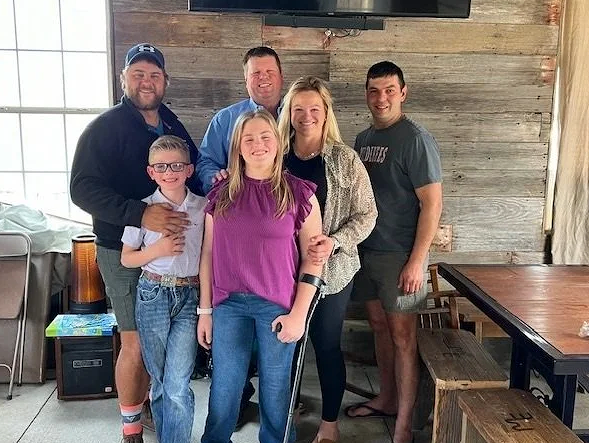
Matt and Valerie Brack, Brack Farms and Brack Harvesting
Not only has the Brack family shared dinners and spent holidays together with their H2A employees, several of the workers have visited their kids’ school where they educated students about South African traditions and sports like Rugby. “My son loves these guys,” notes Valerie. “Our son, Blake, was so excited to see JP again that he made him a sign to welcome him at the airport.”
Cheryl and Dwight Schilling, Schilling Feed Lot and Farms
The Schillings understand their H2A employees are people first, and farm laborers second. That’s why they go out of their way to ensure their workers can enjoy their favorite hobbies while away from home. “You know, they want to leave early on Wednesday nights because they like to golf, so we set up the schedule so at 5:00 p.m. on Wednesday night, they’re out of there,” Cheryl says. “We’ve just always felt like we want to treat people the way we would want our kids to be treated if they were going to a foreign country and if you want them to be happy, let them get involved in the community … go play golf, join a dart league, make friends in the community. They’re going to be more apt to come back if they have ties to more than just their job,” Cheryl advises. She adds, “It’s the great employees you hire that make the H2A program worth it, and make your farm successful.”
An H2A employee who’d been with Schillings for six seasons got married after his third season. Not only did the Schillings bring his wife over with him, the couple now works together on the Schillings’ farm.
Read more about the Schillings’ perspective on treating your H2A employees right
It takes a system
The most successful ag employers don’t figure things out on-the-fly. They create an intentional worker management system that supports their goals. Following these best practices and tips will help you:
Increase productivity
Reduce legal risk
Improve worker retention
Create a smoother, more predictable season
USA Farm Labor supports you every step of the way
When you partner with USA Farm Labor, you’re assigned a Worker Placement Coordinator who provides you and your workers with a single contact throughout your entire season. They support you before, during, and after your worker's arrival. You can count on them to answer questions related to best practices and compliance with H2A rules and regulations, as well as help resolve any concerns or conflicts that arise. They even reach out to check in and ensure everything is going smoothly.
