

Wages, Taxes, and Other Worker-Related H-2A Visa Program Responsibilities
9 important requirements all H-2A employers should know
If you own a U.S. farm or ag business and are either using or considering the H-2A Visa Program, you must meet some specific requirements to be eligible for and participate in the program. These requirements include having a Federal Employer Identification Number (FEIN) and an active Workers’ Compensation policy, as well as providing housing, meals, transportation, and travel reimbursement for H-2A workers.
Learn more about eligibility requirements for the H-2A Visa Program
Learn more about participation requirements and preparing to apply for the H-2A Visa Program
What worker-specific obligations must employers meet under the H-2A Program?
In addition to the H-2A Visa Program eligibility and general participation requirements, there are some other important H-2A worker-related responsibilities that are important for H-2A employers to know to help ensure they stay compliant. This blog summarizes these responsibilities, so you can have all the facts before submitting an H-2A Visa Program application.
1. The 50% Rule and domestic recruitment
The H-2A Visa Program was set up with rules to make sure U.S. workers aren’t put at a disadvantage in the job market. H-2A employers must treat all U.S. workers fairly when it comes to opportunity, pay, and benefits. The 50% rule addresses the opportunity aspect.
The 50% rule says that, up to halfway through your period of need, if domestic workers contact you or are referred to you by your State Workforce Agency (SWA), you must interview all applicants and referrals and offer the job to all U.S. workers who are qualified, willing, able, and available—even if you already had plans to hire or have already hired foreign H-2A workers. When we file your ETA 790, the SWA calculates the halfway point of your period of need and gives it to us with your approved Job Order.
If you’ve already hired the number of H-2A workers requested on your application, you’ll have to let a foreign worker go to make room for the U.S. worker, unless you’re willing and able to hire the domestic worker in addition to the H-2A worker. Halfway through your contract period, you’re also required to complete a Final Recruitment Report, as well as submit a report of any domestic applications and referrals to the Department of Labor.
Wages
2. The Adverse Effect Wage Rate (AEWR)
As the 50% rule equalizes the opportunity for domestic workers, the H-2A Visa Program is also designed to ensure U.S. workers are treated fairly with respect to wages. The Adverse Effect Wage Rate (AEWR) is a minimum wage that was established to prevent the employment of foreign farm labor from adversely affecting wages of similarly employed domestic workers. The AEWR is the minimum wage you can pay H-2A employees. You can certainly pay them more, as well as provide bonuses, so long as this is specified in your ETA 790.
The AEWR has changed over the years, with the most recent change taking effect October 2, 2025. The latest methodology now recognizes skill levels, job complexity, and the economic value of housing, transportation, and other statutory benefits. The DOL applies an Adverse Compensation Adjustment (ACA), which varies by state and equates to a reduction of $1 to $3 per hour. This calculation is done by the Department of Labor so, as an H-2A employer, you pay the published AEWR. It does not show up on pay slips as a deduction. Domestic ‘corresponding workers’ performing equivalent tasks do not receive the ACA and must be paid the full AEWR or higher. You must pay H-2A employees at least twice a month but can pay them weekly, bi-weekly, or semi-monthly, whichever you prefer. The pay frequency will be specified on your ETA 790 Job Order.
Learn more about the recently updated AEWR structure
3. Pay slips
H-2A employers must keep earning records for each H-2A worker and provide each worker with a pay slip at the end of every pay period. Failure to provide adequate pay slips may result in a per worker, per violation fine from the Department of Labor. USA Farm Labor provides you with a template with all the required pay slip fields, which include:
Worker’s name
Worker’s permanent address (foreign address)
FEIN number
Dates of pay period
Any deductions
Number of hours of work offered per day
Start and end times of each day
Total number of hours worked each day
Total number of hours worked during pay period
Total amount paid for pay period
Date of payment
If a worker is sick during an entire pay period, you still need to create a pay slip reflecting no work was done along with a note regarding the reason.
Pay slips are important for many reasons, including:
You can use them to determine whether or not you have offered the number of hours required by the 3/4 Guarantee (explained below)
If a worker transfers to another job after working for you, he/she will need pay slips to prove to the United States Citizenship and Immigration Service (USCIS) that he/she maintained his/her H-2A status
If a worker returns home, but wishes to come back to America as an H-2A worker, the consulate may ask for pay slips as evidence the worker maintained his/her H-2A status
4. Deductions
The only deductions H-2A employers may take from an H-2A worker’s pay are:
The allowable meal charge set by the Department of Labor
Federal income tax withholding if the worker requested you to withhold and has signed a W-4
State/local income tax withholding, if required by law in your state and/or the worker requested and signed the appropriate tax form
All deductions must be disclosed on your ETA 790.
H-2A employers may not deduct the costs of provided safety gear or additional services such as cable, internet, or damage-related expenses. H-2A employees may pay you back separately or give you a check for a service, such as cable, only if they sign an agreement ahead of time stating they’re voluntarily using and paying for the service, or agree to pay for damages.
5. Overtime
In most states, H-2A employees are exempt from overtime requirements but some states require H-2A employers to pay the overtime rate (time-and-a-half) if H-2A employees work more than a set number of hours (the threshold varies by state, with most thresholds not kicking in until 48 hours per week).
6. Taxes
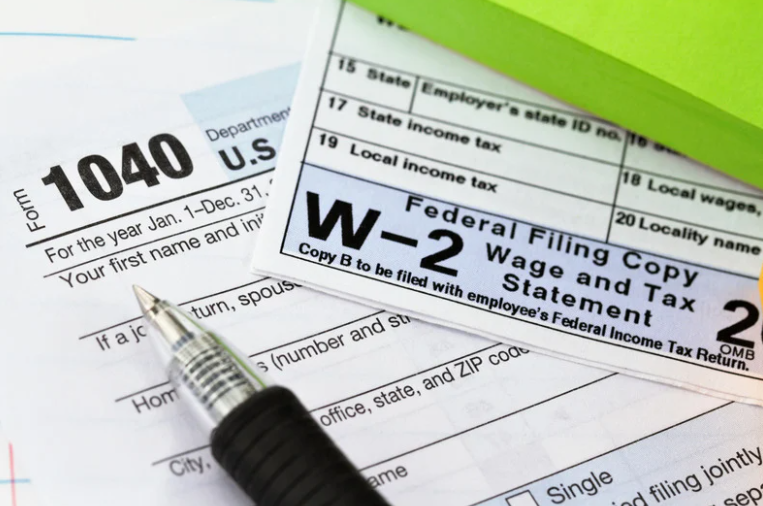
Employees hired through the H-2A Visa Program are W-2 employees, not 1099 employees. As such, they’re required to pay federal income taxes and generally required to pay state income taxes. Some states require H-2A employers to withhold state taxes. We advise you to check with a tax expert in your state.
H-2A employees may ask you to withhold their taxes, and you may do so if they complete and sign a W-4 for federal taxes and the applicable form for state taxes. If you do withhold taxes, you’ll need to calculate the taxes and keep a record of taxes withheld in order to provide workers with W-2 forms. H-2A employees are not eligible to participate and, therefore, exempt from having to pay Medicare, Social Security, and Federal unemployment tax.
Ultimately, H-2A employees are responsible for paying their taxes. Be sure to help each H-2A employee get a Social Security number as soon as they arrive. If a worker doesn’t get one, you may be responsible for backup withholding. Workers may claim dependents, but must apply for a TIN number for those dependents.
Learn more about H-2A worker taxes
7. Work hours
Under the H-2A Visa Program, H-2A employers must offer H-2A employees a minimum of 35 hours per week, and include a one-hour break each day. The maximum allowed hours is a little less clear, but 75 is a safe maximum. Most of our clients offer between 45 and 50 hours per week. The Department of Labor generally doesn’t want employers listing more than 48 hours per week on the ETA 790 so as not to discourage U.S. workers from applying.
H-2A employers are required to give H-2A employees the day off on whatever day the worker recognizes as their Sabbath, which is typically Sunday. You can ask H-2A employees to work more hours if the work is available—including on their Sabbath, Sundays, and federal holidays—but they have the right to decline without negative consequences. H-2A employees can’t be fired for refusing to work more than the number of hours listed on the approved ETA 790. We find that, in most cases, H-2A workers will choose to work extra if they have the opportunity.
Some H-2A employers get confused about how to list hours offered on H-2A employee pay slips. Here are a few examples for clarity:
On a busy day, you tell the H-2A employee he/she can work extra and he/she works an extra 2 hours. You should record 10 hours offered.
The H-2A worker gets sick and takes a normal workday off. You should record the number of hours you would’ve normally offered.
Weather makes it impossible to work on a given day. Record 0 hours offered that day and specify the reason.

8. The Three-Fourths (3/4) Guarantee
Regardless of how well you plan, variables, such as weather, can impact the hours you can offer H-2A employees each week. We recommend you base the number of hours you specify on your Job Order on your best estimate of an average week’s workload.
The 3/4 Guarantee requires H-2A employers to guarantee H-2A employees employment and payment for at least 3/4 (75%) of the work hours in the contract period as listed on the approved Job Order (ETA 790). This provides protection that workers will be compensated for, at a minimum, 3/4 of the hours specified in the ETA 790 in the event a storm or some other unforeseen event makes it impossible to work or you run out of work. The contract period starts on the worker’s first day of work.
To be clear, the 3/4 Guarantee only requires you to offer the hours. If an H-2A employee takes a normal workday off, the normal hours offered count. Overtime and hours worked on Sabbaths and federal holidays count towards fulfillment of the 3/4 Guarantee. If you fail to offer the hours required by the 3/4 Guarantee, you’ll be required to pay workers the difference, as if they had worked the guaranteed hours.
Possible exceptions where the 3/4 rule may not apply:
A major catastrophe that the Department of Labor deems as causing a contract impossibility (like a flood destroys the crop)
An H-2A employee quits before the end of the season
You’re required to let the H-2A employee go as a result of the 50% rule and having to hire a domestic worker that displaces the H-2A employee
Having to let an H-2A employee go for a legitimate reason
Here’s an example of how the 3/4 Guarantee would be calculated:
Per the H-2A application, the H-2A employer is offering six-day workweeks at 8 hours per day for a 10-month season
6 days x 8 hours x 4 weeks x 10 months = 1,920 hours of work (at 100%)
Required to offer a minimum of 1,440 hours (1,920 x .75)
Say a worker arrived 1 month after the start date:
Required to offer a minimum of 1,296 hours ([6 days x 8 hours x 4 weeks x 9 months] x .75)
9. Work performed
Tasks performed by H-2A employees must fall within those specified in the approved Job Order. It’s illegal for an H-2A employee to perform tasks outside of the approved Job Order. Likewise, H-2A employees can only perform work for the employer listed on the Temporary Labor Certification. They can’t work for anyone else or at any locations that haven’t been approved.
Many rules, one trusted partner
Keeping up with all the H-2A Visa Program rules and regulations can be daunting. USA Farm Labor specializes in not only managing all your paperwork and sourcing verified, skilled H-2A workers but also applying best practices and our 22 years of experience to make sure you stay compliant from day one.
